Agency vs. SaaS: Why Your Business Thrives When You Combine Both Models
Discover why blending the high-touch agency model with the scalable SaaS model creates a resilient, profitable business. Learn actionable strategies for implementation.
Mewayz Team
Editorial Team
The Modern Business Dilemma: Service or Software?
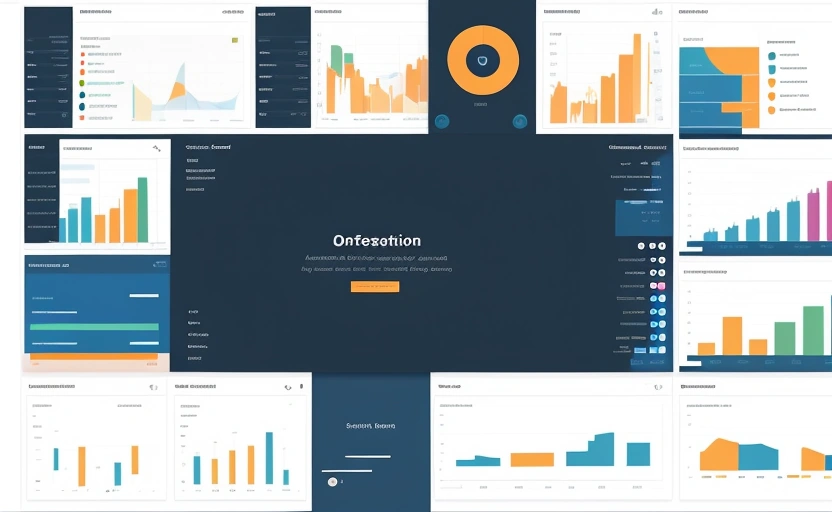
You’ve likely faced this critical crossroads: Should you build a high-touch agency that delivers personalized, hands-on service to clients? Or should you develop a scalable SaaS product that runs automatically with minimal human intervention? For years, business leaders treated these as mutually exclusive paths—but the landscape has shifted dramatically. The most successful modern businesses aren't choosing one over the other; they're strategically blending both. The agency model provides the deep client relationships and customization that command premium prices, while the SaaS model delivers the scalability and recurring revenue that fuel growth. When combined, they create a business that's not just profitable, but resilient to market shifts. This hybrid approach is exactly why platforms like Mewayz, with their 208 modules serving 138,000 users, empower agencies to offer both bespoke solutions and self-service tools. The future belongs to businesses that can deliver white-glove service through scalable technology.
Understanding the Core Strengths of Each Model
Before we explore integration, let's clearly define what each model brings to the table. The agency model is built on human expertise and customized service. Agencies thrive on solving complex, unique problems for clients through consultative relationships. This model allows for high-value projects, direct client control, and the ability to pivot strategies based on real-time feedback. The downside? It's notoriously difficult to scale because it relies heavily on billable hours and key personnel.
The SaaS model, in contrast, leverages technology to deliver standardized solutions to many customers simultaneously. Its strengths include predictable recurring revenue, high gross margins, and the ability to serve thousands of customers with the same core product. The challenges include longer sales cycles, higher initial development costs, and the need for continuous product updates. While SaaS scales efficiently, it often struggles with personalization and can feel impersonal to clients who need tailored solutions.
The Agency Advantage: Relationship Capital
Agencies build what money can't easily buy: trust. When you're working closely with a client on their marketing strategy, HR policies, or financial systems, you become an extension of their team. This deep integration creates sticky relationships that are hard for competitors to disrupt. A client might pay $10,000/month for agency services because they value the strategic partnership, not just the deliverables.
The SaaS Advantage: Scalability and Data
SaaS products create leverage. Once built, your software can serve one client or ten thousand with minimal additional cost. This scalability generates incredible operational efficiency. Additionally, SaaS platforms aggregate valuable data across their user base, enabling insights that individual agencies might miss. For example, Mewayz's analytics across 138,000 users reveal trends that help all clients optimize their operations.
Why Going Hybrid Beats Choosing One Model
The either-or approach to business models is becoming obsolete. Companies that rely solely on the agency model hit revenue ceilings dictated by their team's capacity. Those exclusively focused on SaaS often struggle with commoditization and churn as competitors offer similar features at lower prices. The hybrid model creates a powerful synergy where each approach compensates for the other's weaknesses.
Consider this: Your SaaS platform becomes the foundation that handles routine tasks efficiently, freeing your agency team to focus on high-value strategic work. Meanwhile, your agency services demonstrate the platform's maximum potential, creating living case studies that drive platform adoption. Clients who start with your agency services often transition to using your self-service tools, while SaaS clients who need more hands-on help upgrade to managed services. This creates multiple revenue streams from the same client base.
The most successful modern businesses use their SaaS platform as the engine and their agency services as the steering wheel—one provides power, the other provides direction.
Real-World Examples of the Hybrid Model in Action
Let's look at how successful companies implement this strategy. Many digital marketing agencies now offer their own proprietary software alongside traditional services. For instance, an agency might develop a custom CRM built on Mewayz's API ($4.99/module) that they use for their retainer clients while also offering it as a standalone product. This approach allows them to:
- Validate their software with real client use cases before productizing it
- Create recurring revenue beyond project-based work
- Differentiate from competitors who only offer services
- Scale their impact without linearly increasing headcount
Another example comes from HR consultancies that use platforms like Mewayz's HR modules as the foundation for their services. They might offer a basic self-service HR platform to small businesses at $19/month, while providing full-scale HR management as a premium service for larger enterprises. The platform handles compliance documentation and payroll processing automatically, while the consultants focus on strategic workforce planning and culture development.
The Financial Case for Blending Models
From a pure numbers perspective, the hybrid model creates a more stable and valuable business. Agencies typically trade at 1-2x revenue multiples, while SaaS companies command 5-10x multiples due to their recurring revenue streams. By incorporating SaaS elements, an agency can significantly increase its valuation. Meanwhile, SaaS companies that add agency services see reduced churn and higher lifetime value per client.
Consider the revenue diversification benefits: During economic downturns, clients might cancel expensive agency retainers but keep their essential SaaS subscriptions. Conversely, during growth periods, satisfied SaaS users often upgrade to full-service agency packages. This natural hedging makes your business more resilient to market cycles. Additionally, the hybrid model typically achieves higher net revenue retention rates—often exceeding 120%—as clients expand their usage across both services and software.
Profitability Through Strategic Layering
The most profitable hybrid businesses carefully structure their pricing tiers. They might offer a free tier of their SaaS product to attract leads, a $49/month pro plan for self-service users, and custom enterprise solutions starting at $5,000/month that include dedicated agency support. This structure captures value across the entire market spectrum while maximizing revenue from each client segment.
💡 DID YOU KNOW?
Mewayz replaces 8+ business tools in one platform
CRM · Invoicing · HR · Projects · Booking · eCommerce · POS · Analytics. Free forever plan available.
Start Free →Implementing the Hybrid Model: A Step-by-Step Guide
Transitioning to a hybrid model requires careful planning. Here's how to approach it systematically:
- Audit your current offerings: Identify which of your agency services could be productized. Look for repetitive tasks that clients consistently request—these are your SaaS opportunities.
- Start with a minimum viable product (MVP): Rather than building a full platform from scratch, use an existing framework like Mewayz to create your first productized service. This reduces development time and cost.
- Pilot with existing clients: Offer your new SaaS tool to your best agency clients at a discounted rate in exchange for feedback. Their input will help you refine the product before a broader launch.
- Create clear service boundaries: Define what's included in each tier—what the software handles automatically versus what requires human intervention. This prevents scope creep and ensures profitability.
- Develop integrated workflows: Ensure your agency team and SaaS platform work seamlessly together. For example, use Mewayz's API to automatically create client projects when they sign up for certain services.
- Train your team: Help your agency staff transition from pure service delivery to managing a combination of services and software support.
- Market the combined value: Position your hybrid offering as the best of both worlds—the scalability of technology with the personalization of expert service.
Leveraging Technology to Bridge the Gap
The success of your hybrid model depends heavily on choosing the right technological foundation. Platforms like Mewayz provide the infrastructure needed to seamlessly connect agency services with SaaS products. With 208 modules covering everything from CRM to analytics, you can build custom solutions for clients without developing everything from scratch. The white-label option ($100/month) allows you to brand the platform as your own, creating a cohesive experience for clients.
API access ($4.99/module) enables deeper integration between your custom agency workflows and the standardized SaaS platform. For example, you could build a custom dashboard that pulls data from Mewayz's analytics module and combines it with your agency's proprietary metrics. This level of integration makes the transition between self-service and full-service seamless for clients, encouraging them to move up the value ladder.
Avoiding Common Integration Pitfalls
Many businesses struggle when combining models because they treat them as separate silos. The most successful implementations ensure that the SaaS platform and agency services share data and workflows. Clients should experience a unified system, not two disconnected offerings. Additionally, avoid the temptation to over-customize the SaaS platform for each client—maintain a core product that works for everyone while offering agency services for specific customizations.
The Future is Integrated: What's Next for Hybrid Businesses
As technology continues to evolve, the line between services and software will blur even further. We're already seeing the rise of AI-powered tools that automate routine agency tasks while preserving the strategic human element. The most forward-thinking businesses are positioning themselves to leverage these advancements by building flexible hybrid models today.
The businesses that will thrive in the coming years aren't pure agencies or pure SaaS companies—they're integrated solutions providers. They understand that clients want both the efficiency of technology and the wisdom of experienced professionals. By building this dual capability now, you future-proof your business against market shifts and technological disruptions. The goal isn't to choose between agency and SaaS models, but to master the art of combining them in ways that deliver unprecedented value to your clients.
Frequently Asked Questions
Can small agencies realistically implement a hybrid model?
Absolutely. Starting with a single productized service built on an existing platform like Mewayz allows small agencies to test the waters with minimal investment while gradually building their SaaS capabilities.
How do I price hybrid offerings without confusing clients?
Create clear tiered pricing that separates software access from professional services. For example, offer a basic SaaS subscription, a pro plan with limited support, and premium tiers that include dedicated agency resources.
Won't offering SaaS cannibalize my agency revenue?
Properly structured, the opposite occurs. SaaS offerings often serve as entry points that later lead to agency work, while agency clients appreciate the efficiency gains from using your integrated software tools.
What's the biggest challenge in transitioning to a hybrid model?
The cultural shift within your team is often the toughest hurdle. Service-oriented staff need to adapt to product thinking, while ensuring the human touch remains central to your value proposition.
How long does it typically take to see ROI from a hybrid approach?
Most businesses see initial traction within 3-6 months, with significant ROI materializing within 12-18 months as recurring revenue builds and client retention improves across both service and software offerings.
Ready to Simplify Your Operations?
Whether you need CRM, invoicing, HR, or all 208 modules — Mewayz has you covered. 138K+ businesses already made the switch.
Get Started Free →Try Mewayz Free
All-in-one platform for CRM, invoicing, projects, HR & more. No credit card required.
Related Guide
HR Management Guide →Manage your team effectively: employee profiles, leave management, payroll, and performance reviews.
Get more articles like this
Weekly business tips and product updates. Free forever.
You're subscribed!
Start managing your business smarter today
Join 30,000+ businesses. Free forever plan · No credit card required.
Ready to put this into practice?
Join 30,000+ businesses using Mewayz. Free forever plan — no credit card required.
Start Free Trial →Related articles
Agency Solutions
Beyond Break-Fix: How IT Service Providers Profit from Business Software Bundles
Mar 10, 2026
Agency Solutions
How to Build a Thriving Partner Ecosystem for Your White-Label Platform
Mar 10, 2026
Agency Solutions
Scaling Franchise Success: How Consultants Leverage White-Label Software
Mar 10, 2026
Agency Solutions
How to White-Label Your Software: A Customization Guide for Every Industry
Mar 10, 2026
Agency Solutions
Why MSPs Are Adding White-Label Business Tools To Their Stack
Mar 10, 2026

Agency Solutions
Beyond the Balance Sheet: How Accounting Firms Are Winning with Branded Software
Mar 10, 2026
Ready to take action?
Start your free Mewayz trial today
All-in-one business platform. No credit card required.
Start Free →14-day free trial · No credit card · Cancel anytime