No Data Analyst? No Problem: How to Set Up Business Analytics in 6 Steps
Learn how to implement effective business analytics without hiring expensive specialists. Practical guide using tools small businesses can actually afford and use.
Mewayz Team
Editorial Team
Why Every Business Needs Analytics (Yes, Even Yours)
You're tracking sales, managing customers, and paying employees—but are you truly understanding what's driving your business forward? According to BARC Research, companies using business analytics are 5x more likely to make faster decisions. Yet 54% of small businesses cite "lack of expertise" as their biggest barrier to implementation. The truth is, you don't need a six-figure data analyst to gain actionable insights. With today's tools, any business owner or manager can set up meaningful analytics that drive real results.
Consider Sarah, who runs a 12-person marketing agency. She implemented basic analytics tracking and discovered that 80% of her revenue came from just 3 clients—enabling her to focus her team's efforts strategically. Or Mike, whose e-commerce store identified that customers who watched product videos were 3x more likely to purchase. These insights didn't require PhDs in data science—just the right approach and tools.
What Business Analytics Actually Means for Small Businesses
Forget complex statistical models and machine learning algorithms—at least for now. Business analytics for small operations boils down to answering fundamental questions: Where is our revenue coming from? Which customers are most profitable? What marketing channels deliver the best ROI? How efficient are our operations?
These questions translate into four core analytics types every business should track:
- Financial Analytics: Revenue trends, profit margins, cash flow patterns
- Customer Analytics: Acquisition costs, lifetime value, retention rates
- Operational Analytics: Process efficiency, resource utilization, workflow bottlenecks
- Marketing Analytics: Campaign performance, channel effectiveness, conversion rates
The goal isn't to become a data scientist but to make better-informed decisions. As Peter Drucker famously noted, "What gets measured gets managed."
The Tools You'll Need (Hint: You Probably Already Have Them)
The beauty of modern business software is that analytics capabilities are often built-in. Your CRM, accounting software, and marketing platforms already collect mountains of data—you just need to connect the dots.
Essential Tools for DIY Analytics:
- Integrated Business Platform: Platforms like Mewayz combine CRM, invoicing, and analytics in one place, automatically connecting your data sources
- Spreadsheet Software: Excel or Google Sheets for basic calculations and visualizations
- Dashboard Tools: Simple drag-and-drop builders that require no coding
- Marketing Analytics: Google Analytics, social media insights
Many businesses make the mistake of buying expensive specialized tools prematurely. Start with what you have—most businesses use only 20% of their existing software's analytics capabilities.
Your 6-Step Analytics Implementation Plan
Ready to stop guessing and start knowing? Follow this practical roadmap to implement analytics in your business within 30 days.
Step 1: Define Your Key Business Questions
Before looking at any data, identify the 3-5 questions that would most impact your business if answered. For a restaurant, this might be "Which menu items are most profitable?" For a consulting firm, "Which services have the highest client retention?"
Be specific: Instead of "improve sales," ask "Which customer segment has the highest growth potential?" These questions will guide your entire analytics setup.
Step 2: Identify Your Data Sources
Map where the answers to your questions live. Sales data might be in your CRM, financial data in your accounting software, customer behavior data in your website analytics. Most businesses are surprised to discover they're already collecting 90% of the data they need.
Create a simple spreadsheet listing each question and the corresponding data sources. This becomes your analytics blueprint.
Step 3: Centralize Your Data
This is where integrated platforms shine. Instead of juggling multiple disconnected systems, use a platform that brings your data together automatically. Mewayz's analytics module, for example, pulls data from CRM, invoicing, and other modules into unified dashboards.
If you're using separate systems, export key metrics to a central spreadsheet weekly. Consistency matters more than sophistication at this stage.
Step 4: Create Your Core Dashboards
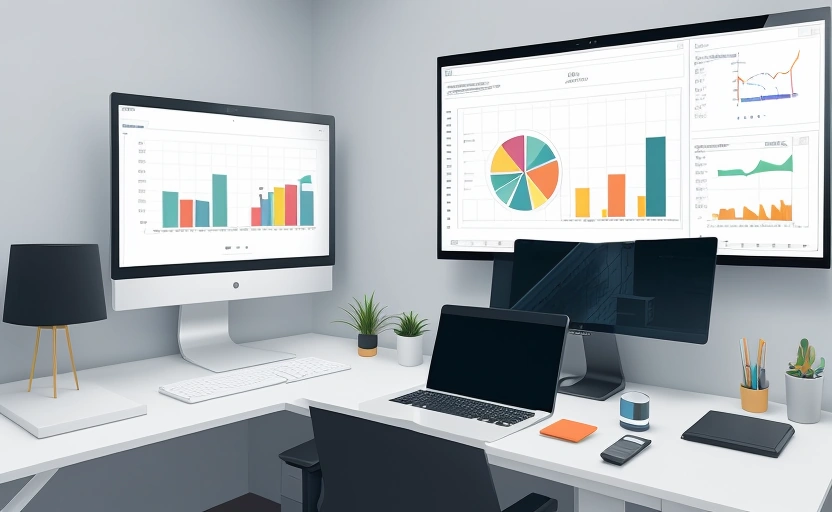
Start with 2-3 simple dashboards that answer your key business questions. A financial dashboard might show monthly revenue, expenses, and profit margins. A customer dashboard could display acquisition sources and retention rates.
Use simple visualizations—bar charts for comparisons, line graphs for trends, pie charts for proportions. The goal is clarity, not complexity.
Step 5: Establish Review Routines
Analytics only create value when reviewed regularly. Schedule weekly 30-minute analytics reviews with your team. Discuss what the data shows, what surprises emerged, and what actions you'll take.
Monthly, conduct a deeper dive to identify longer-term trends and strategic insights.
Step 6: Iterate and Expand
Your first analytics setup won't be perfect—and that's fine. After 30 days, assess what's working and what questions remain unanswered. Gradually add new metrics and dashboards as your comfort with analytics grows.
Common Analytics Mistakes (And How to Avoid Them)
Most analytics failures come from misunderstanding what's actually valuable. Avoid these common pitfalls:
💡 DID YOU KNOW?
Mewayz replaces 8+ business tools in one platform
CRM · Invoicing · HR · Projects · Booking · eCommerce · POS · Analytics. Free forever plan available.
Start Free →Tracking Everything: The "data rich, information poor" syndrome. Focus on metrics that directly impact decisions rather than collecting every possible data point.
Analysis Paralysis: Spending weeks perfecting dashboards instead of taking action. Remember: 80% insight now beats 100% perfection later.
Vanity Metrics: Tracking numbers that look impressive but don't drive business outcomes. Website visits matter less than conversion rates.
Ignoring Context: Numbers without context are meaningless. A 10% sales increase is great—unless your industry is growing at 25%.
"The goal of business analytics isn't to have perfect data—it's to make better decisions with the data you have."
Real-World Analytics Examples You Can Steal
Need inspiration? Here are practical analytics setups from actual small businesses:
E-commerce Store (8 employees)
Key Questions: Which products are most profitable? Where do our best customers come from?
Dashboard Setup: Combined Google Analytics with Shopify data to track customer acquisition cost by channel and product profitability. Discovered that Instagram ads generated higher-value customers than Facebook, reallocating 60% of their ad budget.
Consulting Firm (15 employees)
Key Questions: Which services have the best margins? Which clients have the highest retention?
Dashboard Setup: Used time-tracking data alongside billing records to calculate true profitability per service line. Found that their most expensive service had the lowest margins due to implementation complexity.
Restaurant (25 employees)
Key Questions: What menu items drive profitability? When are we most efficiently staffed?
Dashboard Setup: Integrated POS data with inventory costs to calculate actual dish profitability. Discovered their signature steak, while popular, had thin margins compared to pasta dishes. Adjusted pricing strategy and increased overall margins by 18%.
When to Consider Professional Help
While this guide focuses on DIY analytics, there are times when bringing in expertise makes sense:
- Your business exceeds $5M in annual revenue
- You need predictive analytics or complex modeling
- Data integration requires custom API development
- You're preparing for significant funding or acquisition
Even then, start with the foundation you've built. A part-time consultant can often provide the specialized expertise needed without the cost of a full-time hire.
Your Analytics Future: From Basic to Strategic
Once you've mastered basic analytics, you can gradually advance to more sophisticated approaches. Predictive analytics can forecast sales trends, while prescriptive analytics can suggest optimal decisions.
The businesses that thrive in today's economy aren't necessarily those with the most data—they're those that use data most effectively. By starting simple and building gradually, you'll develop a data-driven culture that positions your business for sustainable growth.
Remember: Analytics isn't about replacing intuition—it's about informing it. The best business decisions combine quantitative insights with qualitative understanding. Your experience plus data beats either alone.
Frequently Asked Questions
What's the most important metric for a new business to track?
Customer acquisition cost relative to lifetime value—this tells you if your business model is sustainable.
How much time should I spend on analytics each week?
Start with 30-60 minutes weekly for review and basic maintenance—the goal is consistency over complexity.
Can I really get valuable insights without statistical training?
Absolutely—most business insights come from simple comparisons and trend analysis, not advanced statistics.
What's the biggest mistake small businesses make with analytics?
Tracking too many metrics instead of focusing on the 5-10 that actually drive decisions.
How do I know if my analytics are actually improving decisions?
Track the outcomes of decisions made with data versus those made without—measure the improvement in results.
All Your Business Tools in One Place
Stop juggling multiple apps. Mewayz combines 207 tools for just $19/month — from inventory to HR, booking to analytics. No credit card required to start.
Try Mewayz Free →Try Mewayz Free
All-in-one platform for CRM, invoicing, projects, HR & more. No credit card required.
Related Guide
Business Analytics Guide →Turn data into decisions with dashboards, reports, and AI-powered insights.
Get more articles like this
Weekly business tips and product updates. Free forever.
You're subscribed!
Start managing your business smarter today
Join 30,000+ businesses. Free forever plan · No credit card required.
Ready to put this into practice?
Join 30,000+ businesses using Mewayz. Free forever plan — no credit card required.
Start Free Trial →Related articles
Business Operations
How a Kenyan Logistics Startup Built Fleet Management Without Custom Software: A Mewayz Case Study
Mar 9, 2026
Business Operations
35+ White-Label SaaS Statistics: The Agency Revenue Opportunity (2026)
Mar 9, 2026
Business Operations
The Ultimate Guide to Building a Business OS From Scratch (2026)
Mar 9, 2026

Business Operations
How Batik Budaya Built a DTC Fashion Empire on Mewayz: A Jakarta Case Study
Mar 9, 2026

Business Operations
40+ AI in Business Statistics: Adoption Rates and ROI Data for 2026
Mar 9, 2026

Business Operations
How To Sell Physical And Digital Products From A Single Platform
Mar 9, 2026
Ready to take action?
Start your free Mewayz trial today
All-in-one business platform. No credit card required.
Start Free →14-day free trial · No credit card · Cancel anytime