E-Commerce Analytics: The 7 Metrics That Actually Drive Profit
Cut through the noise. Discover the 7 essential e-commerce metrics that truly impact your bottom line, from Customer Lifetime Value to Return on Ad Spend.
Mewayz Team
Editorial Team
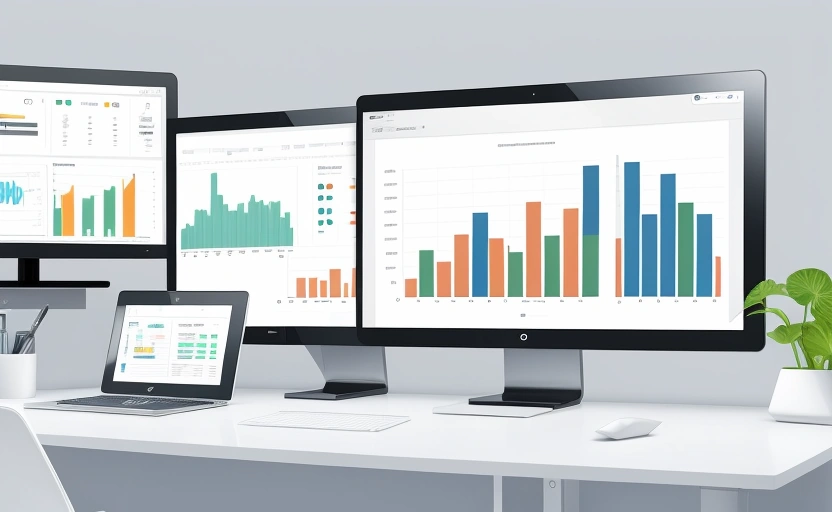
In the bustling digital marketplace, data is abundant, but insight is rare. Many e-commerce managers drown in a sea of dashboards, tracking dozens of metrics that offer little actionable intelligence. The real challenge isn't collecting data; it's identifying the handful of numbers that truly dictate whether your business thrives or merely survives. Shifting your focus from vanity metrics to the core drivers of profitability is the single most powerful change you can make. This guide cuts through the clutter to reveal the seven e-commerce metrics that serve as the vital signs of your business's health.
Why Most E-Commerce Analytics Fail
It's common for online stores to celebrate a spike in social media likes or a record number of monthly visitors. While these figures can feel rewarding, they often have a weak correlation with actual revenue. The primary reason analytics initiatives fail is a lack of strategic focus. Teams get lost tracking what's easy to measure instead of what's important to measure. A 20% increase in page views means nothing if your conversion rate drops by 30%.
The second major pitfall is data silos. When your customer data, financial data, and marketing data live in separate systems, it's impossible to see the complete picture. You might know your sales are up, but without connecting that to your marketing spend, you can't tell if you're actually making more money. True e-commerce intelligence requires an integrated view of the entire customer journey, from first click to final purchase and beyond. This is where a unified platform like Mewayz, which connects CRM, invoicing, and analytics, becomes indispensable.
The 7 Essential E-Commerce Metrics
Forget tracking everything. These seven metrics provide a complete, actionable view of your e-commerce performance.
1. Customer Lifetime Value (CLV)
Customer Lifetime Value predicts the total revenue your business can reasonably expect from a single customer account over the course of your relationship. It’s arguably the most important metric because it shifts your focus from one-time transactions to long-term customer relationships. A high CLV means you can justify spending more to acquire a customer, leading to more sustainable growth. Calculating CLV involves understanding Average Order Value, Purchase Frequency, and Customer Lifespan.
For example, if your average customer spends $50 per order, shops four times a year, and remains a customer for three years, their CLV is $600. Knowing this number allows you to make smarter decisions about customer service, retention marketing, and acquisition budgets.
2. Customer Acquisition Cost (CAC)
Customer Acquisition Cost is the total cost of sales and marketing efforts needed to acquire a new customer. This includes ad spend, content creation costs, and salaries for marketing teams. To calculate it, divide your total acquisition costs by the number of new customers acquired in a specific period. The magic happens when you compare CAC to CLV.
A healthy business model typically has a CLV that is at least 3x its CAC. If your CAC is $150 and your CLV is $600, you have a healthy 4:1 ratio. If your CAC starts to creep up and approach your CLV, it's a major red flag that your growth is becoming unsustainable.
3. Conversion Rate (CR)
Your Conversion Rate is the percentage of website visitors who complete a desired action, most commonly making a purchase. It’s a direct measure of your site's effectiveness at turning traffic into revenue. A low conversion rate, even with high traffic, indicates friction in the buying process—perhaps complicated navigation, slow loading times, or unclear value propositions.
Industry averages vary, but a 2-3% conversion rate is common. Improving this metric by even a fraction of a percent can have a massive impact on revenue. A/B testing different elements like your checkout process, product images, and call-to-action buttons is the most effective way to boost your CR.
4. Average Order Value (AOV)
Average Order Value measures the average amount spent each time a customer places an order. Increasing your AOV is a powerful lever for boosting revenue without necessarily acquiring more customers. Tactics to improve AOV include upselling (suggesting a premium product), cross-selling (recommending complementary items), offering volume discounts, and setting free shipping thresholds.
If your AOV is $75, implementing a "free shipping on orders over $100" policy can incentivize customers to add one more item to their cart, potentially lifting your AOV to $105 and significantly increasing your margin on that sale.
5. Cart Abandonment Rate
This metric reveals the percentage of shoppers who add items to their cart but leave without completing the purchase. The average cart abandonment rate hovers around 70%, representing a huge opportunity for recovered revenue. High abandonment often points to unexpected costs (like shipping or taxes), a mandatory account creation step, or a complicated checkout process.
To combat abandonment, implement tactics like exit-intent pop-ups offering a small discount, simplifying the checkout to a single page, and being transparent about all costs upfront. Sending a targeted email reminder to users with items in their cart can recover 10-15% of lost sales.
💡 DID YOU KNOW?
Mewayz replaces 8+ business tools in one platform
CRM · Invoicing · HR · Projects · Booking · eCommerce · POS · Analytics. Free forever plan available.
Start Free →6. Return on Advertising Spend (ROAS)
ROAS measures the gross revenue generated for every dollar spent on advertising. It's calculated by dividing the revenue attributed to an ad campaign by the cost of the campaign. A ROAS of 5 means you earned $5 for every $1 spent. While a positive ROAS is good, you must consider your profit margins. A ROAS of 3 might be profitable if your margins are 50%, but it could be a loss if your margins are only 20%.
ROAS helps you allocate your marketing budget efficiently. If Facebook Ads deliver a ROAS of 6 and Google Ads deliver a ROAS of 3, you know where to focus your spending for maximum return.
7. Net Promoter Score (NPS)
Net Promoter Score gauges customer loyalty and satisfaction by asking a simple question: "On a scale of 0 to 10, how likely are you to recommend our company to a friend or colleague?" Respondents are categorized as Promoters (9-10), Passives (7-8), or Detractors (0-6). The NPS is calculated by subtracting the percentage of Detractors from the percentage of Promoters.
A high NPS is a strong indicator of future growth, as loyal customers drive repeat purchases and organic word-of-mouth marketing. A low NPS is an early warning sign that you need to investigate and fix underlying issues with your product, service, or support.
How to Implement This Framework: A Step-by-Step Guide
Knowing the metrics is one thing; building a system to track and act on them is another. Here’s a practical plan to get started.
- Audit Your Current Tools: List all the platforms you use (Google Analytics, Shopify, Facebook Ads Manager, etc.). Identify where each of the 7 metrics is currently tracked and if the data is accurate.
- Centralize Your Data: The goal is a single source of truth. Use a platform like Mewayz that integrates your store, CRM, and advertising data. This eliminates manual data pulling and conflicting numbers.
- Create a Master Dashboard: Build a dashboard that displays these 7 metrics front and center. This should be the first screen you and your team see every morning.
- Set Benchmarks and Goals: Where are you now? Where do you want to be in 3, 6, and 12 months? Set specific, measurable goals for each metric (e.g., "Increase AOV from $75 to $90 in Q3").
- Establish a Weekly Review Ritual: Dedicate 30 minutes each week to reviewing the dashboard as a team. Discuss what moved, why it moved, and what action you will take based on the insight.
The goal of analytics is not data, but action. A metric only matters if it changes your decision.
Moving Beyond the Basics: The Power of Integration
Once you have a firm grasp on these seven metrics, the next level of sophistication comes from connecting them to other parts of your business. For instance, how does your marketing ROAS impact your overall cash flow? How can your customer support team use NPS feedback to reduce churn and increase CLV? A modular business OS like Mewayz allows you to see these connections by integrating analytics with operational modules like invoicing, payroll, and inventory management.
This integrated view transforms analytics from a reporting function into a strategic compass. Instead of just knowing your conversion rate dropped, you can see if it's correlated with a recent site update, a change in inventory levels, or a shift in your target audience. This depth of insight is what separates thriving e-commerce brands from those that struggle to grow.
The Future of E-Commerce is Intelligent
The landscape of online retail is evolving towards predictive analytics and AI-driven insights. The brands that will lead tomorrow are those building a robust data foundation today. By mastering these seven essential metrics, you're not just tracking your past performance; you're building the framework for intelligent, data-driven decisions that will fuel your growth for years to come. Start by integrating these metrics into your daily rhythm, and watch as your focus shifts from simply selling products to building a profitable, enduring business.
Frequently Asked Questions
What is the most important e-commerce metric?
Customer Lifetime Value (CLV) is often considered the most important because it reflects the long-term health and profitability of your customer relationships, guiding smarter spending on acquisition and retention.
How can I lower my Customer Acquisition Cost (CAC)?
Improve your organic reach through SEO and content marketing, leverage customer referrals, and focus retention efforts on high-CLV segments to make your acquisition spending more efficient.
What's a good conversion rate for an e-commerce store?
While it varies by industry, a good benchmark is between 2-3%. However, the focus should be on improving your own rate through continuous A/B testing of your website and checkout process.
How do I calculate my Return on Advertising Spend (ROAS)?
Divide the revenue directly generated from an ad campaign by the total cost of that campaign. For example, if an ad campaign costing $1,000 generates $5,000 in sales, your ROAS is 5.
Why is my cart abandonment rate so high?
High abandonment (often 70%+) is typically caused by unexpected shipping costs, a complicated checkout process, or requiring account creation. Simplify the process and be transparent about costs to reduce it.
All Your Business Tools in One Place
Stop juggling multiple apps. Mewayz combines 208 tools for just $49/month — from inventory to HR, booking to analytics. No credit card required to start.
Try Mewayz Free →Try Mewayz Free
All-in-one platform for CRM, invoicing, projects, HR & more. No credit card required.
Related Guide
Business Analytics Guide →Turn data into decisions with dashboards, reports, and AI-powered insights.
Get more articles like this
Weekly business tips and product updates. Free forever.
You're subscribed!
Start managing your business smarter today
Join 30,000+ businesses. Free forever plan · No credit card required.
Ready to put this into practice?
Join 30,000+ businesses using Mewayz. Free forever plan — no credit card required.
Start Free Trial →Related articles
Business Operations
Gusto vs Integrated Payroll: Why Your Standalone HR System Is Creating Chaos
Mar 7, 2026
Business Operations
45+ Cross-Border E-Commerce Statistics for International Sellers (2026)
Mar 7, 2026
Business Operations
The Ultimate Salon and Spa Operations Bible: Booking, POS, Staff, and Loyalty (2026)
Mar 7, 2026
Business Operations
Case Study: How a German MSP Added Managed Business Software to Its Service Portfolio
Mar 7, 2026

Business Operations
Automate Your Social Media: A Practical Guide to Saving 10+ Hours Per Week
Mar 7, 2026

Business Operations
AI-Powered Analytics: How Small Businesses Get Big Insights Without a Data Team
Mar 7, 2026
Ready to take action?
Start your free Mewayz trial today
All-in-one business platform. No credit card required.
Start Free →14-day free trial · No credit card · Cancel anytime