How to Build a Custom Report Builder Your Team Will Actually Use
Step-by-step guide to building a user-friendly custom report builder. Learn key features, avoid common pitfalls, and integrate with tools like Mewayz for powerful analytics.
Mewayz Team
Editorial Team

The Unfulfilled Promise of Business Intelligence
Every modern business runs on data, but most teams are stuck with rigid, pre-built reports that answer yesterday's questions. When a marketing manager needs to see the correlation between ad spend and qualified leads by region, or an operations lead wants to track fleet maintenance costs against on-time delivery rates, generic dashboards fall short. The result? Endless requests to the IT department, frustrated business users, and critical decisions made on gut feeling instead of data. Building a truly flexible, user-friendly custom report builder isn't just a technical project; it's a strategic move to empower your entire organization. This guide walks through the process of creating a tool that puts the power of data directly into the hands of your business users.
Why Off-the-Shelf Reporting Tools Fail Business Users
Most companies start with standard reporting features in their CRM or ERP. These tools work well for common, standardized reports like monthly sales figures or employee headcount. However, they quickly hit a wall when faced with unique business logic or cross-functional data needs. The primary failure points are a lack of flexibility and a steep learning curve. Business users aren't data scientists; they need an intuitive interface that allows them to ask complex questions without writing SQL queries. A successful custom report builder must abstract the underlying data complexity while providing immense flexibility.
For example, a sales team might need to create a report showing all clients who purchased Product A in the last quarter but haven't engaged with a marketing campaign in the last 60 days. This requires joining data from sales, marketing, and customer success modules—a task often impossible without technical help. A well-designed custom builder makes this a drag-and-drop operation.
Core Features Every Custom Report Builder Must Have
1. An Intuitive Drag-and-Drop Interface
The foundation of adoption is usability. The interface should use familiar metaphors like dragging data fields (e.g., 'Customer Name,' 'Invoice Date') onto a canvas to build a report. Visual feedback is critical; users should see a live preview of their report as they build it. This immediate gratification reduces frustration and encourages experimentation.
2. Flexible Data Source Connectivity
Your builder must connect seamlessly to multiple data sources. This goes beyond just your primary database. It should pull from CRM modules, marketing platforms, external APIs, and even spreadsheets. Using a platform like Mewayz, which offers a unified API across 208 modules, can dramatically simplify this backend complexity, presenting a single, coherent data model to the user.
3. Powerful Filtering and Segmentation
Basic filters (e.g., 'date is after...') are table stakes. The real power comes from conditional logic. Users should be able to create groups of filters with AND/OR logic, such as 'Region is North America OR Europe' AND 'Sales Volume greater than $10,000'. This allows for precise audience and performance segmentation.
4. Multiple Visualization Options
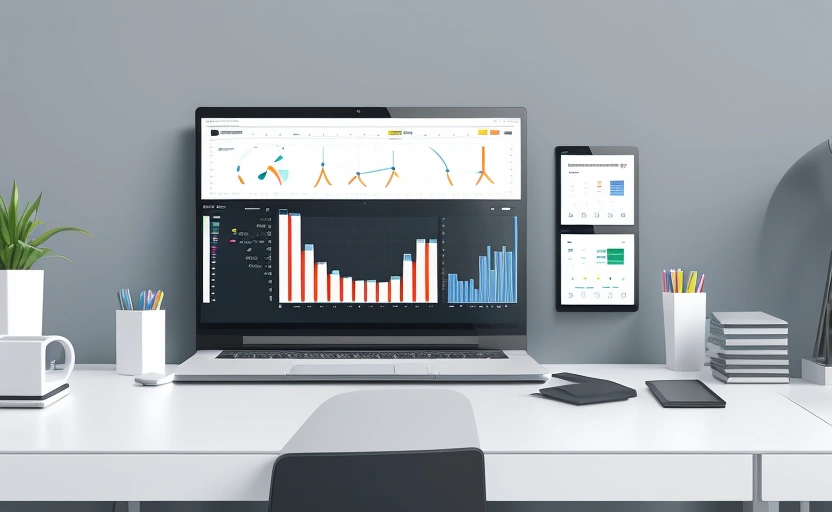
Not all data is best represented in a table. The builder should offer a variety of chart types—bar charts, line graphs, pie charts, and even geographic maps. The key is to suggest the best visualization based on the data types selected, helping users create more effective reports.
A Step-by-Step Blueprint for Building Your Report Builder
Building a report builder is a significant undertaking. Breaking it into manageable phases ensures you deliver value quickly and iterate based on user feedback.
- Phase 1: Define the Data Model. Start by mapping all available data sources and creating a unified schema. This is the most technical phase. Use tools like Mewayz's API to normalize data from different modules (CRM, HR, Invoicing) into a consistent format. This creates a 'single source of truth' for the report builder.
- Phase 2: Build the Core Query Engine. Develop the backend service that translates the user's drag-and-drop actions into a database query. This engine must be efficient and secure, preventing users from accidentally (or intentionally) running queries that could crash the database.
- Phase 3: Design the UI/UX. Create wireframes and prototypes focused on the user's workflow. The goal is minimalism and clarity. Group related data fields logically (e.g., all customer-related fields together) and provide clear labels and tooltips.
- Phase 4: Implement Visualizations. Integrate a charting library (like Chart.js or D3.js) to render the data. Ensure the charts are interactive, allowing users to drill down for more detail.
- Phase 5: Add Sharing and Export Features. A report is useless if it can't be shared. Build functionality to save reports, share them with team members via a link, and export to PDF or CSV.
- Phase 6: Test and Iterate. Roll out the builder to a small group of power users. Gather feedback on performance, confusing interfaces, and missing data fields. Use this feedback to refine the tool before a company-wide launch.
Integrating with a Modular Platform: The Mewayz Advantage
Building a report builder from scratch is complex and resource-intensive. Leveraging an existing platform can accelerate development by years. Mewayz, as a modular business OS, provides a massive head start. Its API offers standardized access to data from 138,000+ users across its modules. Instead of building connectors for CRM, invoicing, HR, and fleet management, you can use a single, well-documented API.
The biggest cost in building a report builder isn't the UI; it's creating a coherent data layer from dozens of disparate systems. A modular OS solves this problem at its root.
This approach not only speeds up development but also ensures that your report builder automatically gains new data sources as the business OS adds modules. For white-label or enterprise scenarios, this provides a scalable foundation that grows with your client's needs.
💡 DID YOU KNOW?
Mewayz replaces 8+ business tools in one platform
CRM · Invoicing · HR · Projects · Booking · eCommerce · POS · Analytics. Free forever plan available.
Comece grátis →Common Pitfalls and How to Avoid Them
Many custom report builder projects fail due to a few predictable mistakes. Avoid these to ensure success.
- Over-Engineering the First Version: Don't try to build a tool as powerful as Tableau on day one. Start with a Minimal Viable Product (MVP) that handles the top 3-5 most requested report types. You can add advanced features like predictive analytics later.
- Ignoring Performance: A slow report builder is a dead report builder. Optimize your database queries, use caching for frequently accessed data, and set query timeouts to prevent system strain.
- Poor Data Governance: Not all users should see all data. Implement a robust permissions system from the start, ensuring that sales reps can't see HR salary data, for instance.
- Neglecting User Training: The best tool is useless if people don't know how to use it. Create short video tutorials and host live training sessions to drive adoption.
Real-World Use Cases: From Sales Pipelines to Fleet Management
The true test of a report builder is its application across different departments. Here are two concrete examples.
Sales Pipeline Analysis: A sales director can build a report that visualizes the entire sales pipeline by stage, showing the average time a lead spends in each stage and the conversion rate between stages. By filtering for a specific product line and time period, they can instantly identify bottlenecks and allocate resources more effectively.
Fleet Efficiency Tracking: An operations manager can create a report combining fuel consumption data from the fleet module with delivery timestamps from the CRM. This reveals the cost-per-delivery for each vehicle and driver, highlighting opportunities for route optimization or driver training to improve profitability.
The Future is Self-Service Analytics
The demand for data-driven decision-making will only intensify. The businesses that thrive will be those that effectively democratize data access. Building a custom report builder is a tangible step toward creating a culture of analytics. By empowering business users to answer their own questions, you free up technical resources for more complex projects and enable faster, more informed decisions at every level of the organization. The technology is here; the strategic imperative is clear. The question is no longer if you should build this capability, but how quickly you can put it into the hands of your team.
Frequently Asked Questions
What's the biggest technical challenge when building a custom report builder?
The most significant challenge is creating a unified and performant data layer that can seamlessly query multiple, disparate data sources (CRM, ERP, spreadsheets) without compromising database security or speed.
Can I build a report builder without a dedicated development team?
For a basic version, low-code platforms can help, but for a robust, scalable tool that handles complex business logic, a skilled development team is essential to build the backend query engine and a secure, intuitive frontend.
How does a platform like Mewayz simplify the process?
Mewayz provides a pre-built, unified API across its 208 business modules, eliminating the need to build and maintain complex data connectors, which is often the most time-consuming part of the project.
What are the essential security considerations?
You must implement strict row-level and column-level security to ensure users can only access data they are permitted to see, and sanitize all user inputs to prevent SQL injection attacks.
How can I ensure business users will actually adopt the tool?
Focus on an extremely intuitive drag-and-drop interface, provide live previews, and offer targeted training. Start by solving their most pressing reporting pain points to demonstrate immediate value.
Build Your Business OS Today
From freelancers to agencies, Mewayz powers 138,000+ businesses with 208 integrated modules. Start free, upgrade when you grow.
Create Free Account →Try Mewayz Free
All-in-one platform for CRM, invoicing, projects, HR & more. No credit card required.
Obtenha mais artigos como este
Dicas semanais de negócios e atualizações de produtos. Livre para sempre.
Você está inscrito!
Start managing your business smarter today
Join 30,000+ businesses. Free forever plan · No credit card required.
Ready to put this into practice?
Join 30,000+ businesses using Mewayz. Free forever plan — no credit card required.
Iniciar Teste Gratuito →Artigos relacionados

Developer Resources
Booking API Integration: The Ultimate Guide to Adding Scheduling to Your Website
Mar 7, 2026
Developer Resources
How Therapists And Counselors Use Online Booking To Fill Their Schedule
Mar 7, 2026

Developer Resources
Building a Scalable Booking System: Database Design and API Patterns That Scale
Mar 6, 2026
Developer Resources
Build a Tax-Compliant Invoicing API: A Developer's Guide to Automation
Mar 6, 2026
Developer Resources
GraphQL vs REST for Business APIs: Which One Saves You More Time and Money?
Mar 6, 2026
Developer Resources
Building a Multi-Tenant SaaS App: Your Step-by-Step Guide to Scalable Success
Mar 6, 2026
Ready to take action?
Inicie seu teste gratuito do Mewayz hoje
Plataforma de negócios tudo-em-um. Cartão de crédito não necessário.
Comece grátis →14-day free trial · No credit card · Cancel anytime